
PMI Atlanta Chapter - Forums Summaries

""Lean Coffee: Shape PMI Atlanta’s Agile Forum!" by Tana Glassford-Samuel ": February Agile Forum Summary

Written by: Tana Glassford-Samuel, MBA, PMP

Presentation Overview

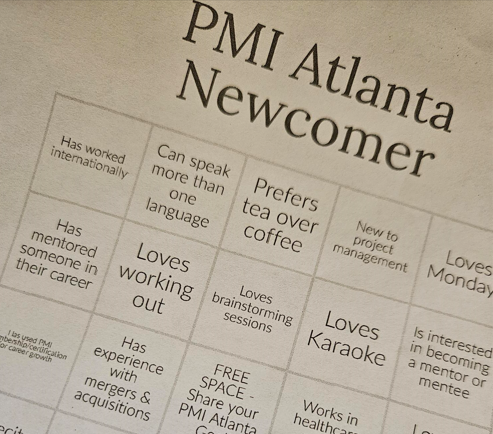
Discover the top insights from our latest Agile Forum, where industry professionals debated, prioritized, and uncovered our 2025 game plan. The latest Agile Forum gathering brought together engaged participants for a dynamic discussion fueled by fresh ideas. The session kicked off with an introduction to Lean Coffee, setting the stage for an interactive and self-directed conversation. Using MentiMeter, attendees reviewed a curated list of trending Agile topics for 2025, ultimately selecting Agile Tools & Techniques, Agile Leadership & Culture, and Agile Metrics & Value Delivery as the top three priorities. But that wasn’t all—participants also brainstormed and contributed their own interests and burning questions, leading to a rich exchange around certifications, metrics, tools, careers, methodologies, speakers, AI, and the Agile PMO.

With lively debates and knowledge-sharing in full swing, the forum wrapped up with a feedback survey, where a resounding 88% of attendees rated the topic relevancy at the highest level. But as the discussions came to a close, one question lingered—what’s next for Agile professionals looking to push the boundaries of Agile adoption, innovation and transformation? The seeds have been planted, but the real challenge lies ahead.

Takeaways

Curious about the latest trends from the Atlanta Agile community and how they’re shaping the 2025 Agile Forum agenda? Here's a summarized version of the ideas submitted by attendees:

Career Growth & Support – Guidance for career pivots, transitioning, and upskilling in Agile, including certification pathways and industry-specific applications.

AI, Analytics & Emerging Tech – Leveraging AI and analytics in Agile methodologies, exploring tools that enhance rather than replace Agile practices in remote/virtual settings.

Agile Certifications & Training – Understanding Agile certifications, their value across industries, and how to integrate Agile into non-traditional fields.

Best Practices & Tools – Identifying top tools and techniques for project managers, value delivery, and Agile success in hybrid and remote environments.

Metrics & Value Measurement – Effective ways to measure team performance, progress, and value delivery using Agile metrics.

Industry-Specific Agile Applications – Exploring Agile’s relevance beyond IT, construction, and healthcare, including movie production and startups unfamiliar with project management.

Community & Knowledge Sharing – Building an Agile community to support newcomers and professionals integrating Agile into non-traditional work environments.

Next Event

Join us at the next PMI Atlanta Agile forum on Tuesday, March 18, 2025

Keynote Presentation: “Agile Unleashed: Lean Coffee Part 2 – More Ideas, More Impact!” presented by Tana Glassford-Samuel

Register at www.pmiatlanta.org/events/event-calendar 
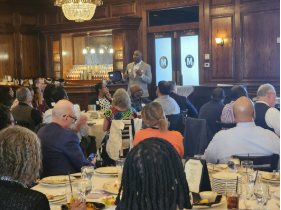
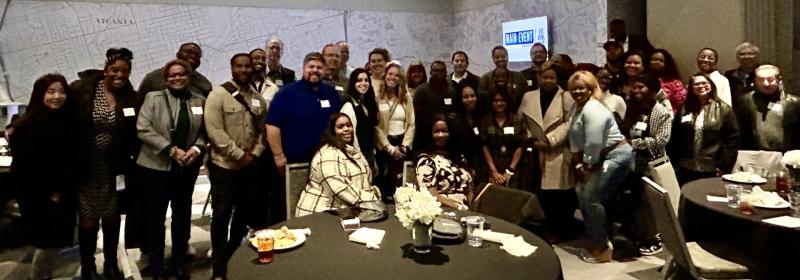
Event Pictures


Performance and Wellness – 2025 January Chapter Meeting

by Mike Ososki, PMP 

Energize your potential! And Maria Horstmann may be just the person to help you do it, via her metabolic health-focus coaching practice. From pre-diabetes with an eating disorder and sugar addiction, Maria reinvented herself to become a high energy healthy ball of fire that is a walking testament to the results of implementing her advice.

Working harder and longer just ain’t gonna cut it no more. In fact, doing so without a decent health foundation will increase your risk of multiple body trouble issues. Like a good PM, ya gotta manage yer risk, right? This is not new news. Well, Maria comes at it from her special angle.

Optimize your body’s energy production at the cellular level, through better metabolism—the chemical processes in cells that make energy, promote growth, and keep you healthy. Another way to say it is that your performance is only as strong as the energy your cells can produce. You really want to avoid “Metabolic Chaos®.” 

The science behind all this is quite complex, but you don’t need to deeply understand it. What you do need to do is monitor and adjust your health numbers. Triglycerides, HDL cholesterol, fasting glucose, hemoglobin A1C, blood pressure, and waist circumference are the most important indicators. (To know the real deal, you can’t be on any meds for any of these markers.) This data-driven functional lab testing approach will help identify stressors that inhibit, disrupt, and prevent optimal body function.

Symptoms like fatigue, stress, and poor focus are often rooted in metabolic dysfunction. Poor sleep habits, processed foods, added sugars, and lack of movement sabotage your energy and hold you back. To be highly productive, well-focused, and resilient require consistent energy from the cellular level.

What can you do? You can better control your daily input choices of sleep, food, and movement. Small steps got you to where you are, and you can take small steps to make better choices with these oh-so important everyday elements of basic life. Try to think and do like this ... 

Solutions-to-Challenges

So let’s prioritize the basics again: sleep and recovery, mastering blood sugar, and aligning time with your values, like these ...

Values-List

Remember that teeny-tiny baby steps are powerful over time. And as you experience even the smallest improvements, let them motivate you to keep on keeping on with your easy-does-it new and improved lifestyle and habits program. Over time, it can lead you to accomplish sustainable energy and peak performance—something every good project manager must value!

Visit Maria’s site https://befabbeyou.com/ to learn more about The Horstmann Method.

The next Chapter Meeting "Designing a Career of a Lifetime" will be held at Georgia Tech Global Learning Center on February 25, 2025. Register Here.

"Channel Your Inner Child To Become A Better Clinical Research Professional" by John Nocero and Andrea Bordonaro: November 2024 Clinical Research Forum Summary

Written by: Elizabeth Adeusi, MHA, PMP

Presentation OverviewNocero-John2Bordonaro-Andrea2

On November 14, 2024, the Clinical Research Forum of the PMI Atlanta Chapter hosted the Channel Your Inner Child To Become A Better Clinical Research Professional event as presented by The Q-Kids: John R. Nocero, PhD and Andrea L. Bordonaro, MAT.

Andrea and John emphasized that in the stressful world of clinical research, becoming overwhelmed by your emotions can happen to all of us. Emotions are your brain’s way of telling you something good or bad is happening in your life. To emotionally regulate yourself means you can step back from whatever emotion you are experiencing, identify it, and manage it as needed. As a result, an approach taught in schools worldwide for more than 15 years and bringing it into the clinical research world can result in better relationships with your colleagues. It’s emotional intelligence on steroids — The Zones of Regulation.

John explained the Zones of Regulation further. There are four zones: blue zone, green zone, yellow zone, and red zone. It is important to identify what zone you are in and manage it as needed, even in Clinical Research, as this can make all the difference in efficacy and results.

Takeaways

  • Emotions do matter. They are incredibly important.
  • The Zones of Regulation give us a concrete strategy to maintain emotions in various situations.
  • Learning to recognize and regulate our emotions daily is beneficial in our personal and professional lives.
  • When we can easily identify our zone as we navigate our day-to-day, we are able to recognize and utilize effective strategies to move us to a more comfortable, successful, and positive place. In turn, we can then make better decisions, improve our interpersonal relationships, and feel better about the aura we put forth about ourselves, which directly impacts how others view and interact with us.
  • Use your next team meeting to introduce the Zones of Regulation to your research staff or as an employee engagement activity. This type of employee engagement—the connection that an employee has with their team, their job, the company culture, and the company itself—can have real impacts on productivity and well-being.

Next Event

Join us at the next PMI Atlanta Chapter Clinical Research Forum in March 2025.

Register at www.pmiatlanta.org/events/event-calendar

Event Picture

Clinical-Res-241114-Event-Picture

"The Art of AI Strategy: Sun Tzu’s Wisdom for AEC Professionals" by Omer Bozok: November AEC Forum Summary

Written by: Dr. Catherine Binuya 

Presentation OverviewBozok-Omer

Omer Bozok, PE, founder of Pheonix iO, has ten years of experience in geotechnical and civil engineering. His contributions to the field include working in electrical utilities, oil and gas, waste management, and mining. He is the lead author of “NextGen: Engineering: Excelling, Practice, Empowering People.

Drawing from the wisdom of Sun Tzu’s writing in the seminal classic literary text, The Art of War, Omer Bozok presents a framework for a strategic approach to implementing AI for industry success. By connecting principle to practice, Bozok, proposes strategy and a playbook for leveraging AI that speaks to safety, security, and responsible innovation.

To be victorious, one must strategically plan first, know the organization, understanding readiness and constraints, have clear goals, and sagely pivot plans in response to circumstances.

Takeaways

  • Strategy: Laying Plans, The Five Factors that determine outcome
    • Moral and Ethics
      • Based on loyalty, shared purpose and value, and motivation
    • Heaven ~ External tactics
      • Recognizing cycles and market forces
    • Earth ~ Logistics
      • Based on data, technical infrastructure, budget, and AI team
    • Commander
      • Wisdom drawn from sincerity, courage, and strictness
      • Requires strategic vision, governance, and empowerment
    • Method and Discipline ~ Professionalism
      • Outline goals, procedures, metrics, continuous improvement, governance, and oversight

Each of the five factors has several key pillars.

  • Playbook
    • Involves five steps: strategic planning and goal setting, assessing, identifying and prioritizing gaps, setting timelines and milestones, and implementation
    • Rank (1-5) for the average score of the pillars for each of the five key areas: Ethics, Market Forces, Logistics, Leadership, and Professionalism to assess an organization’s readiness and constraints
    • Prioritize importance and feasibility of strategic plan scenarios to determine plan for victory/success
      • 1-3 scale: Minimum, Moderate, Critical

Next Event

Register at www.pmiatlanta.org/events/event-calendar

Event Pictures

A1A4

"Strategies for Effective IRT Vendor Management in Clinical Trials" by Gayle Flynn: September 2024 Clinical Research Forum Summary

Written by: Kayla Burrell, MS, CSM

Presentation OverviewSpeakerGayleFlynn-Clinical-Res-240912

On September 12, 2024, the Clinical Research Forum of the PMI Atlanta Chapter hosted the “Strategies for Effective IRT Vendor Management in Clinical Trials” forum event by Gayle Flynn. Ms. Flynn spoke to the audience and shared some key knowledge about best practices for Interactive Response Technology (IRT) vendor management that can help sponsors and study teams achieve their objectives and ensure compliance with regulatory standards. Those best practices are through proper vendor management, project management, communication, risk management, compliance, training, and support.

Ms. Flynn explained that IRT is a system used in clinical trials to manage patient randomization, drug allocation, and inventory tracking. IRT increases efficiency, provides up-to-date patient enrollment information, and helps ensure regulatory requirements adherence. Ms. Flynn broke down the best practices for IRT vendor management as follows:

  • Vendor Selection: The importance of the vendor's experience, technical capabilities, regulatory compliance, and support will determine the vendor’s capabilities and ability to tailor solutions to your specific needs.
  • Project Management: It establishes clear project timelines and milestones and tracks the progress and performance of the vendor.
  • Communication: Establishing and maintaining clear and consistent communication with the vendor and the study team to promptly address any issues or changes.
  • Risk management: Properly identify and mitigate potential risks and challenges that may arise during the study and prepare contingency plans.
  • Compliance: Ensure that the IRT system meets the industry standards and regulations, such as ICH E-6, ICH E-9, and 21 CFR Part 11, and undergoes rigorous testing and validation.
  • Training and support: Provided to the study team and the site staff to help ensure user satisfaction and feedback.

Takeaways

  • All it takes is one glitch to cause a quirky issue with IRT to bring an entire clinical study to a halt. That is why it is important to follow best practices and implement effective strategies.
  • Additional strategies that have been proven effective in ensuring success with IRT are implementing monitoring and quality control, change management, and post-implementation review measures such as lessons learned and strengthening ongoing relationships.

Next Event

Join us at the next PMI Atlanta Chapter Clinical Research Forum on Thursday, November 14, 2024.

Keynote Presentation: TBD

Event Picture

ClinicalResEventPic240912